The Power of Directed Energy
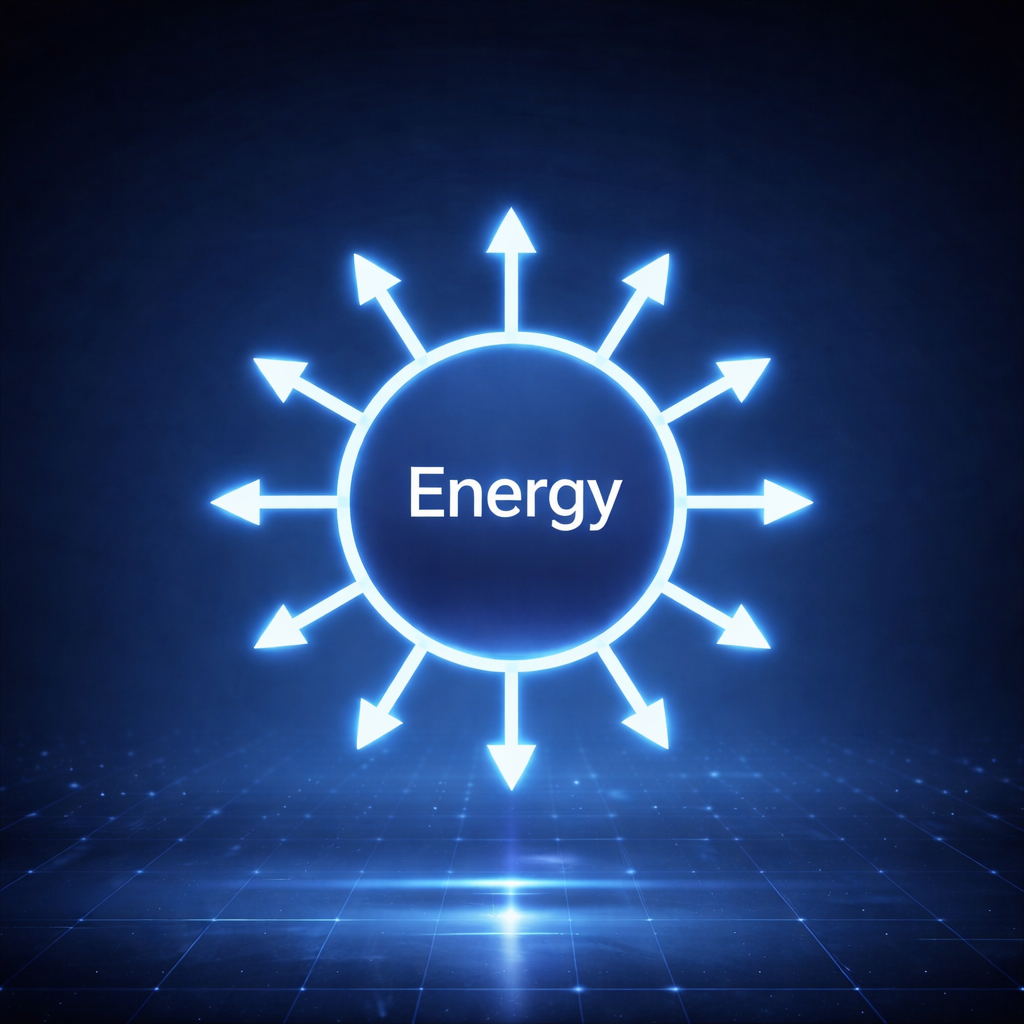 Reactive, scattered, and often duplicating effort because the "why" isn't clear. Low OML
Why Focus is Our Greatest Competitive Advantage
In the technology sector, it is easy to mistake "busy" for "productive." We often see organizations (and even individual teams) operating like the diagram on the right: radiating energy in every direction simultaneously. They are working hard, but because their efforts are fragmented, the net movement in any single direction is minimal.
At K Group, our longevity since 1980 has taught us a vital lesson: Impact is not just about the amount of energy you expend; it’s about the direction in which you point it.
From Fragmentation to Integration
The image on the lower right represents the Master Integrator mindset. When we align our technical expertise, our operational goals, and our core values, that same amount of energy transforms into a powerful, upward trajectory.
For our clients, this distinction is the difference between a collection of "silos" - where IT, physical security, and data all work independently - and a Complete Technology Ecosystem. When a business's technology is fragmented, its energy is leaking.
This is where our Continuous Intelligence offerings come into play. By integrating these systems into a single source of truth, we don't just stop the leakage; we provide a steady stream of real-time insights. Instead of reacting to what happened yesterday, our clients gain the clarity to see what is happening now, allowing them to pivot that energy toward the most impactful business outcomes.
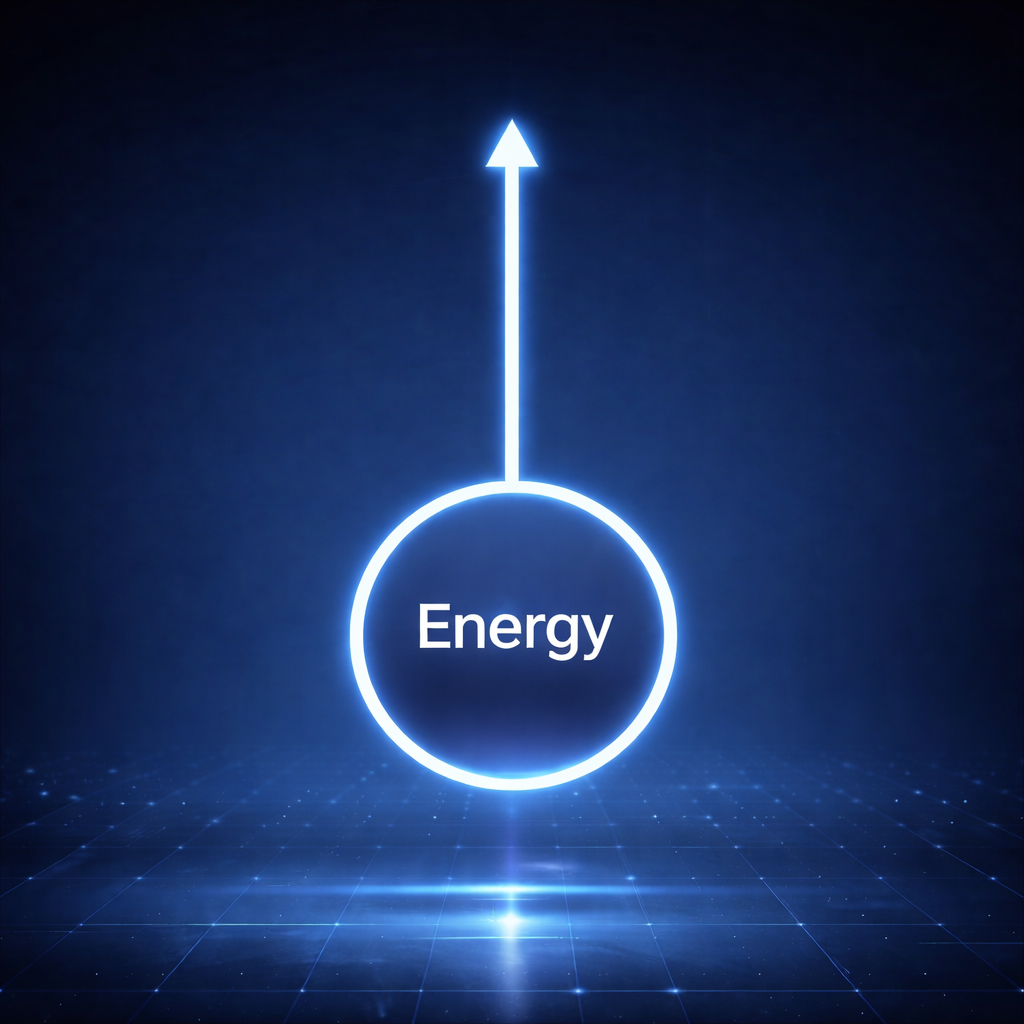 Proactive, synchronized, and driven by a shared strategic goal. High OML
Raising the Maturity Level
This concept of directed energy is also the cornerstone of how we raise our Operational Maturity Level (OML).
When we focus on being Hungry for improvement, Humble enough to collaborate, and Smart enough to prioritize human connection, we stop pushing against ourselves. We start moving as one. Our focus on continuous intelligence ensures that this movement isn't just fast - it’s informed.
The Result: Stability through Focus
In an industry that changes every few months, "scattered energy" is a high-risk strategy. It leads to burnout and technical debt. By contrast, directed energy builds a foundation of trust and consistency.
As we continue to expand our market presence and grow our team of experts, our goal remains the same: to ensure that every ounce of energy we put into our craft is focused on providing the highest value to our partners. It’s not about doing more; it’s about being more effective with everything we do.

Q1: What does "Directed Energy" mean in a business context?
A: Directed energy is the practice of focusing effort on a clear outcome.
It is not about working harder.
It is about working with intent.
Q2: Why is focus considered a competitive advantage?
A: Because unfocused effort creates noise.
Focused effort creates momentum.
Organizations that align around clear priorities move faster and waste less energy.
Q3: What problem does fragmented technology create?
A: Fragmented systems leak value.
Teams duplicate effort.
Decisions rely on outdated or incomplete information.
Q4: What is the Master Integrator mindset?
A: It is the ability to align systems, teams, and goals.
IT, physical security, and data work as one ecosystem.
Energy moves in a single direction.
Q5: What is a Complete Technology Ecosystem?
A: It is an integrated environment where systems share context.
Data flows into a single source of truth.
Insights are available in real time.
Q6: How does Continuous Intelligence support directed energy?
A: Continuous Intelligence eliminates guesswork.
It shows what is happening now.
Teams can redirect effort toward the highest-impact outcomes.
Q7: What is Operational Maturity Level (OML)?
A: OML measures how effectively an organization operates.
Low OML is reactive and scattered.
High OML is proactive and synchronized.
Q8: How does focus improve OML?
A: Clear priorities reduce internal friction.
Teams stop working against each other.
Execution becomes consistent and intentional.
Q9: Why is scattered energy risky in technology?
A: It leads to burnout.
It creates technical debt.
It undermines long-term stability.